TRCP Welcomes Interior Actions Affirming Hunting and Fishing on Public Lands
An updated approach strengthens responsible hunting and fishing opportunities
Washington, D.C. – Today, the Theodore Roosevelt Conservation Partnership welcomed Department of the Interior Secretarial Order 3447, signed by Secretary Doug Burgum, which reaffirms hunting and fishing access on public lands, including updates to how these opportunities are managed on National Wildlife Refuges. These efforts reflect a balanced commitment to wildlife management and the outdoor traditions supported by hunters and anglers.
“Hunters and anglers have long been central to conserving wildlife and habitat in this country – funding conservation and supporting science-based management – and these actions help reinforce that legacy,” said Joel Pedersen, president and CEO for the Theodore Roosevelt Conservation Partnership. “We appreciate the Department of the Interior’s focus on ensuring that public lands provide meaningful, well-managed opportunities to hunt and fish.”
The Secretarial Order contains directives for five DOI Bureaus. Among those are U.S. Fish and Wildlife Service-administered National Wildlife Refuges, which were created with strong support from hunters—who continue to contribute significantly to conservation funding today. The 1997 Wildlife Refuge Improvement Act identified hunting as one of six priority, wildlife-dependent public uses that receive enhanced consideration in refuge management. By increasing scientifically regulated hunting opportunities consistent with state management, refuges can demonstrate effective wildlife stewardship and provide the public with a direct connection to conservation.
The Secretarial Order also addresses how certain refuge management policies will be applied going forward, including the continued implementation of existing voluntary lead-free incentive programs.
“TRCP contributed to the development of the Fish and Wildlife Service’s voluntary lead-free program, and we appreciate DOI continuing to implement this incentive-based approach,” continued Pedersen “We are excited to dig in and help the Department implement this important Secretarial Order.”
The Secretarial Order aligns with the broader direction set by the Make America Beautiful Again Commission by emphasizing collaborative conservation and agency coordination around public access for hunters and anglers. Together, these actions reflect an ongoing federal focus on expanded recreational opportunities.
The TRCP is your resource for all things conservation. In our weekly Roosevelt Report, you’ll receive the latest news on emerging habitat threats, legislation and proposals on the move, public land access solutions we’re spearheading, and opportunities for hunters and anglers to take action. Sign up now.
TRCP’s “In the Arena” series highlights the individual voices of hunters and anglers who, as Theodore Roosevelt so famously said, strive valiantly in the worthy cause of conservation.
Marcus Hockett
Hometown: Dillon, MT Occupation: Field Producer for Fresh Tracks with Randy Newberg Conservation credentials: Hockett’s B.S. in Fish and Wildlife Management and experience in the field as a research technician working with wildlife biologists combined with his background and passion for the outdoors make him an ideal advocate for public lands, hunting, and fishing.
Hockett has hunted across the West, filmed hunts from above the Arctic Circle to the deserts of the Southwest, and has already spent more nights sleeping on public lands than most hunters twice his age. His commitment to conservation and excellent communications skills (he has an M.F.A. in Science and Natural History Filmmaking) have helped solidify the Fresh Tracks brand not only as an entertaining hunting show, but as a trusted source for information on the conservation issues impacting America’s hunters and anglers.
Here is his story.
TRCP: How were you introduced to hunting, fishing, and the outdoors? Who introduced you?
Marcus Hockett: My parents made sure I was immersed in the outdoors, and my dad took me hunting every chance he got. We were lucky to live in an area with public land and plenty of hunting and fishing opportunities, so I’ve been able to recreate and explore in some amazing places my entire life.
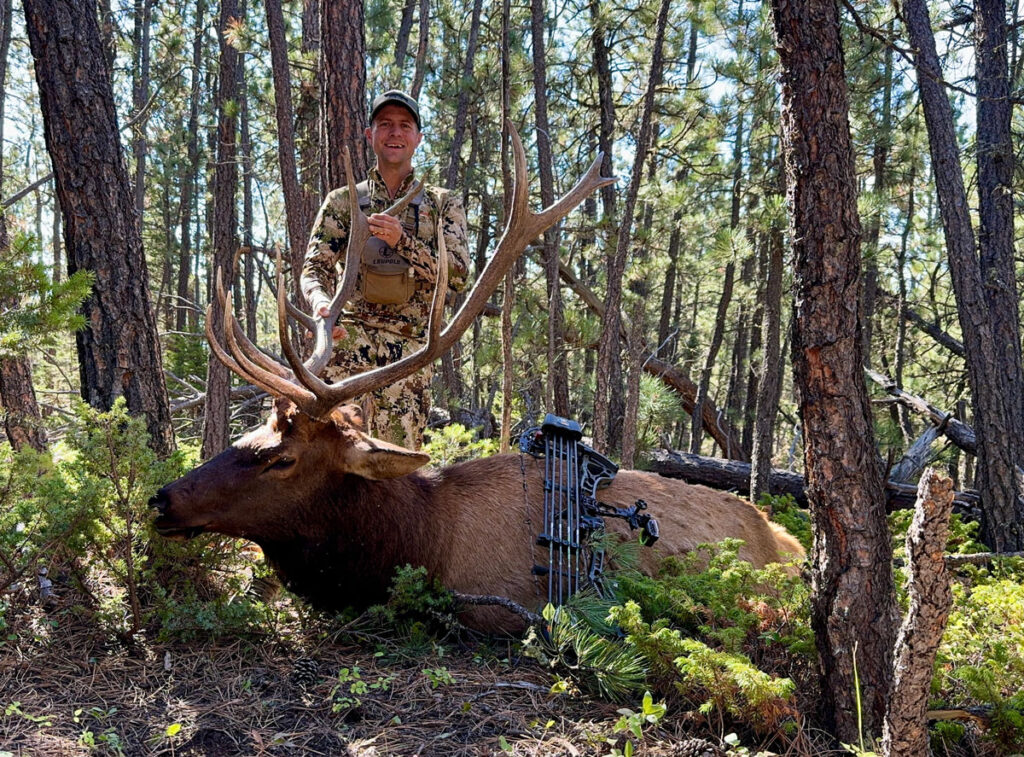
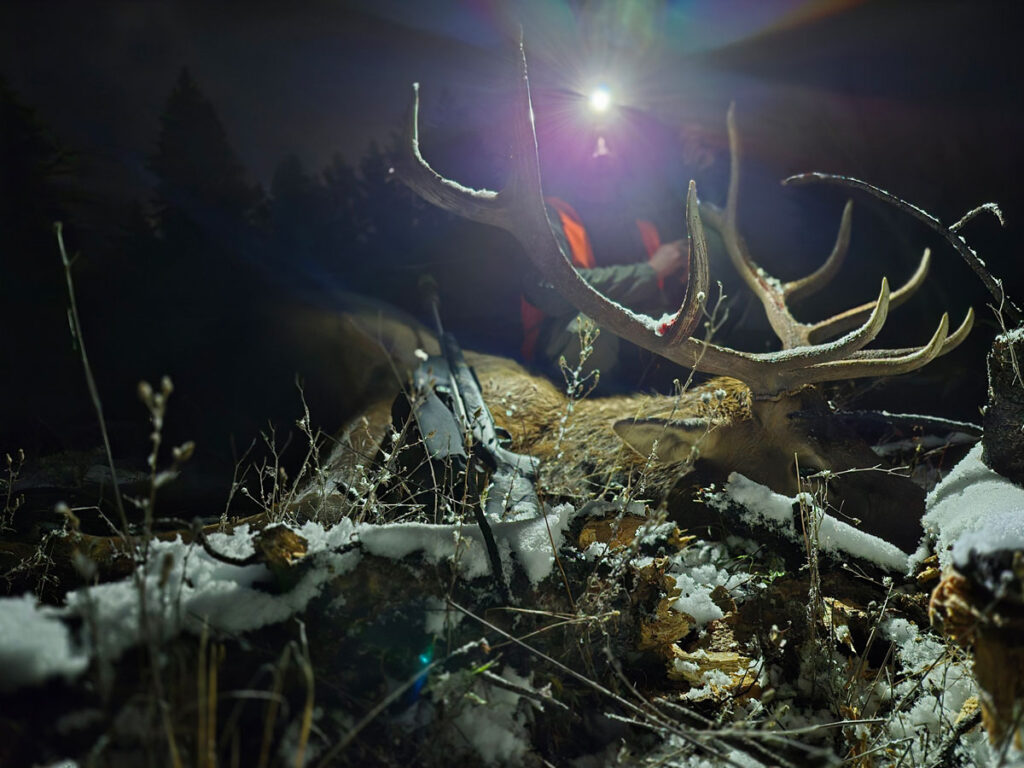
Hockett with a public land, September bull.
TRCP: Tell us about one of your most memorable outdoor adventures.
Marcus Hockett: While working for Montana State University as a research technician, I was with a group deep in the backcountry doing surveys for mountain goats and bighorn sheep. One survey in particular stands out when we were perched on top of a mountain looking over a massive view-shed (the view of an area from a specific vantage point).
Our job was to systematically glass and precisely pinpoint the location of sheep and goats on a map. During the survey we had a goat right below us, a group of bighorn rams fed on a bench down below, beyond the rams were two herds of elk with rutting bulls going crazy, off to the side a pack of wolves were bedded near a kill, and at the kill a grizzly with three cubs cleaned up the scraps. This scene unfolded over an hour or so as we watched in pure silence.
We weren’t supposed to talk to one another during the surveys to assess detection probabilities, which is when one surveyor saw an animal that the others did not. However, one of the grad students I was working for eventually broke when a big boar grizzly chased off the sow and cubs and he blurted out “Are you seeing this?!”
We all replied with “Yeah, this is insane!”
That survey stuck in my mind as an example of a landscape that was truly wild and untouched. Being able to sit there in silence and soak it all in just made the memory that much clearer.
TRCP: If you could hunt or fish anywhere, where would it be and why?
Marcus Hockett: Wild sheep. Anywhere they live. I’ve been extremely lucky to be able to hunt them twice and film a handful of other hunts. I may never get to hunt them again, but being up where sheep live and trying to find a mature ram forces you to be in spots you would never otherwise be.
It bothers me a bit that my answer is wild sheep because hunting them is simply unattainable for most people. It’s either cost prohibitive or you have to win the hunting lottery to chase them, but the landscapes and habitat that support them are some of the most scenic, awe-inspiring areas in the world.
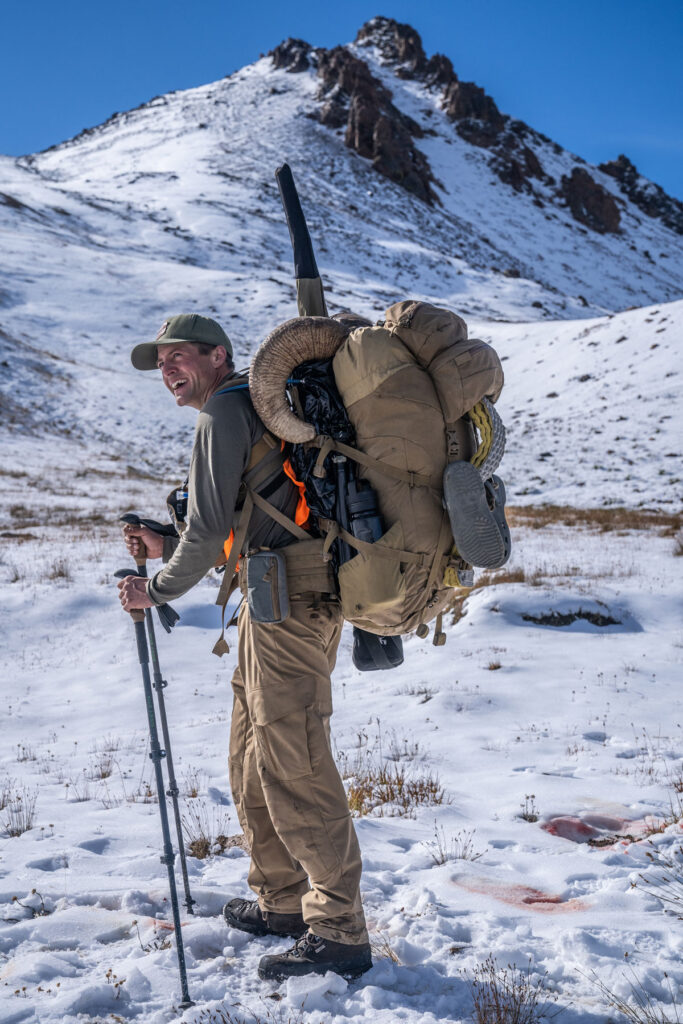
A big smile before a long pack out after a successful sheep hunt.
TRCP: How does conservation help enhance your outdoor life?
Marcus Hockett: It’s a way of protecting and maintaining my favorite things in life. Nearly all of my recreation involves public land or water, and if those lands or waters are degraded, so is the experience.
Working on a juniper removal project will enhance habitat for mule deer that I might eventually hunt. Advocating for conservation funding to support an easement on private land can prevent land from being subdivided and developed, keeping winter range intact for elk that I might eventually hunt.
There are a lot of ways folks can be involved.
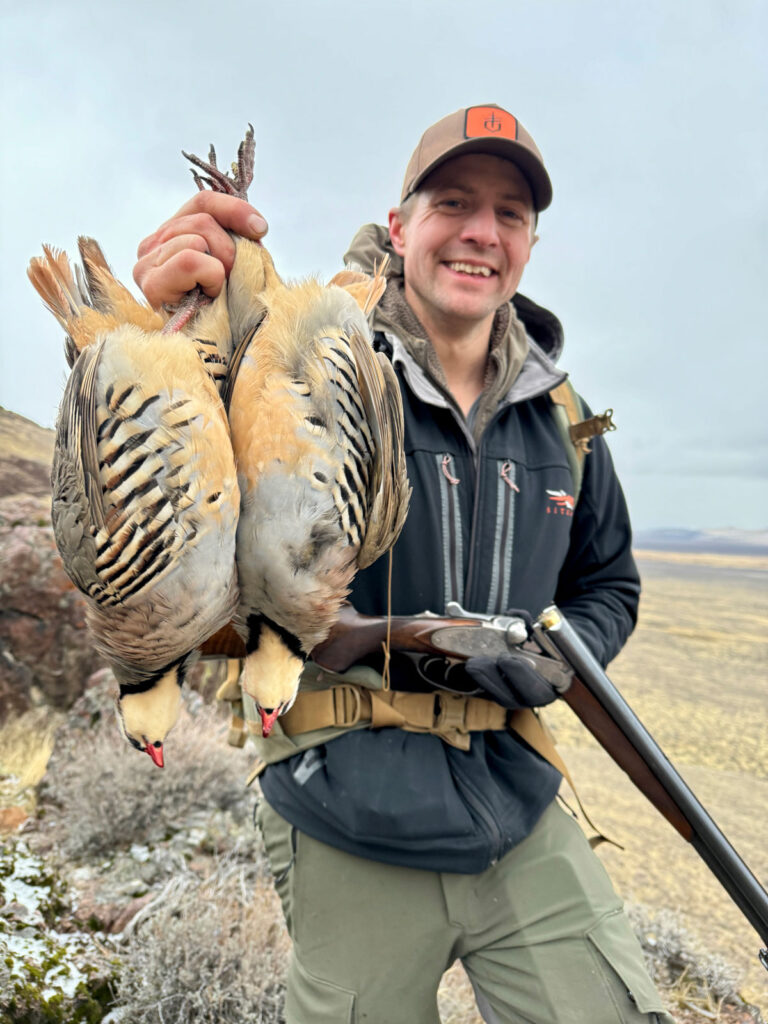
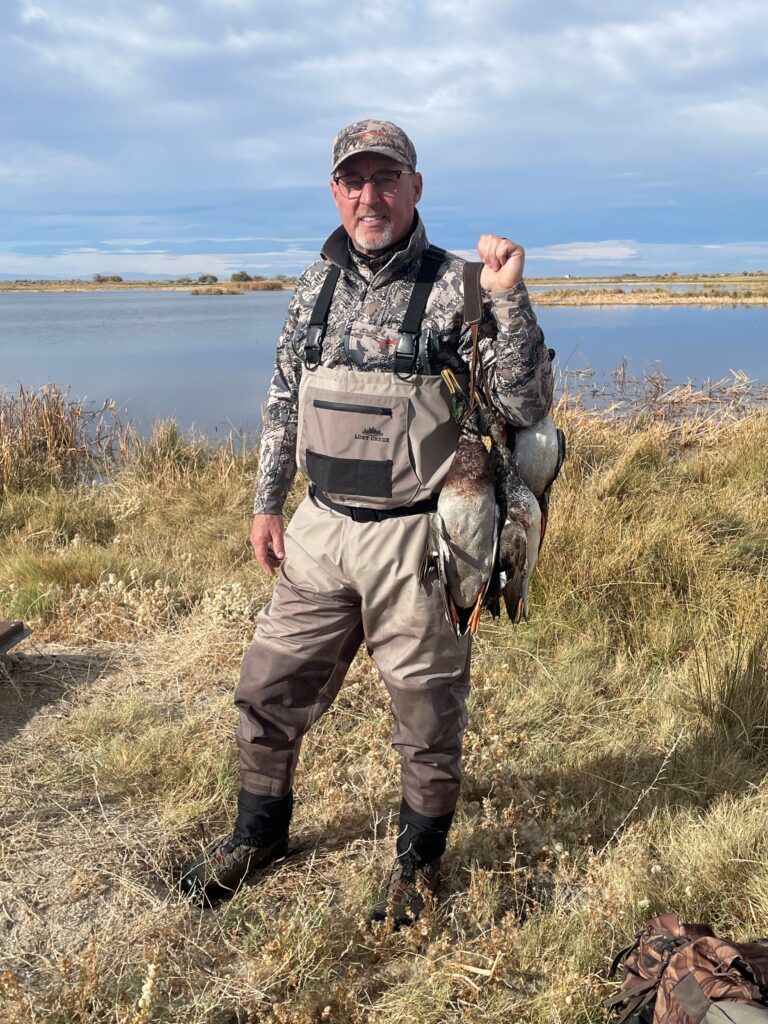
Hockett with a handful of wild chukar.
TRCP: What are the major conservation challenges where you live?
Marcus Hockett: In my opinion, habitat. Wildlife needs a home, they need something to eat and drink. It’s challenging because everyone wants a piece of the pie and the pie is usually shrinking. Whether it’s for development, resource extraction, etc. It’s tough to keep the habitat we have and tough to restore it after it’s been degraded. There are a lot of competing interests for land and resources, so convincing people to value wildlife and natural habitats more than the alternatives can be a real challenge.
TRCP: Why is it important to you to be involved in conservation?
Marcus Hockett: Well there’s the selfish reason for protecting my favorite things so I can continue to go outside and enjoy those things… but I also recognize that a lot of people benefit from public land and it’s worthwhile to conserve wildlife and their habitat so future generations can enjoy them. Plus, it’s just nice to know that there are natural places that haven’t been heavily altered by man.
It can be hard to be optimistic at times, but there is always something we can make progress on. Where progress is made depends on which politicians, land managers, and wildlife managers are leading, but there is always something that can be done.
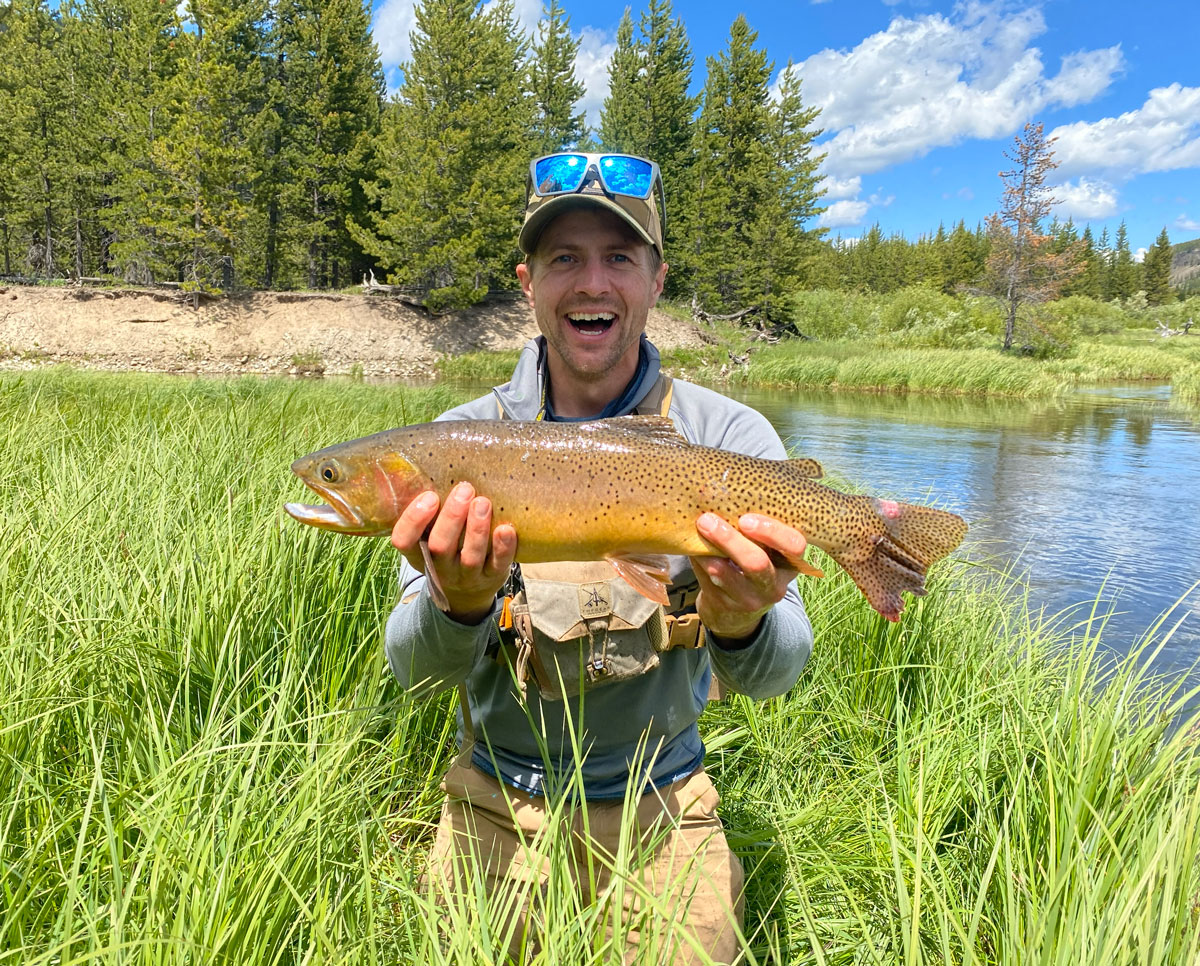
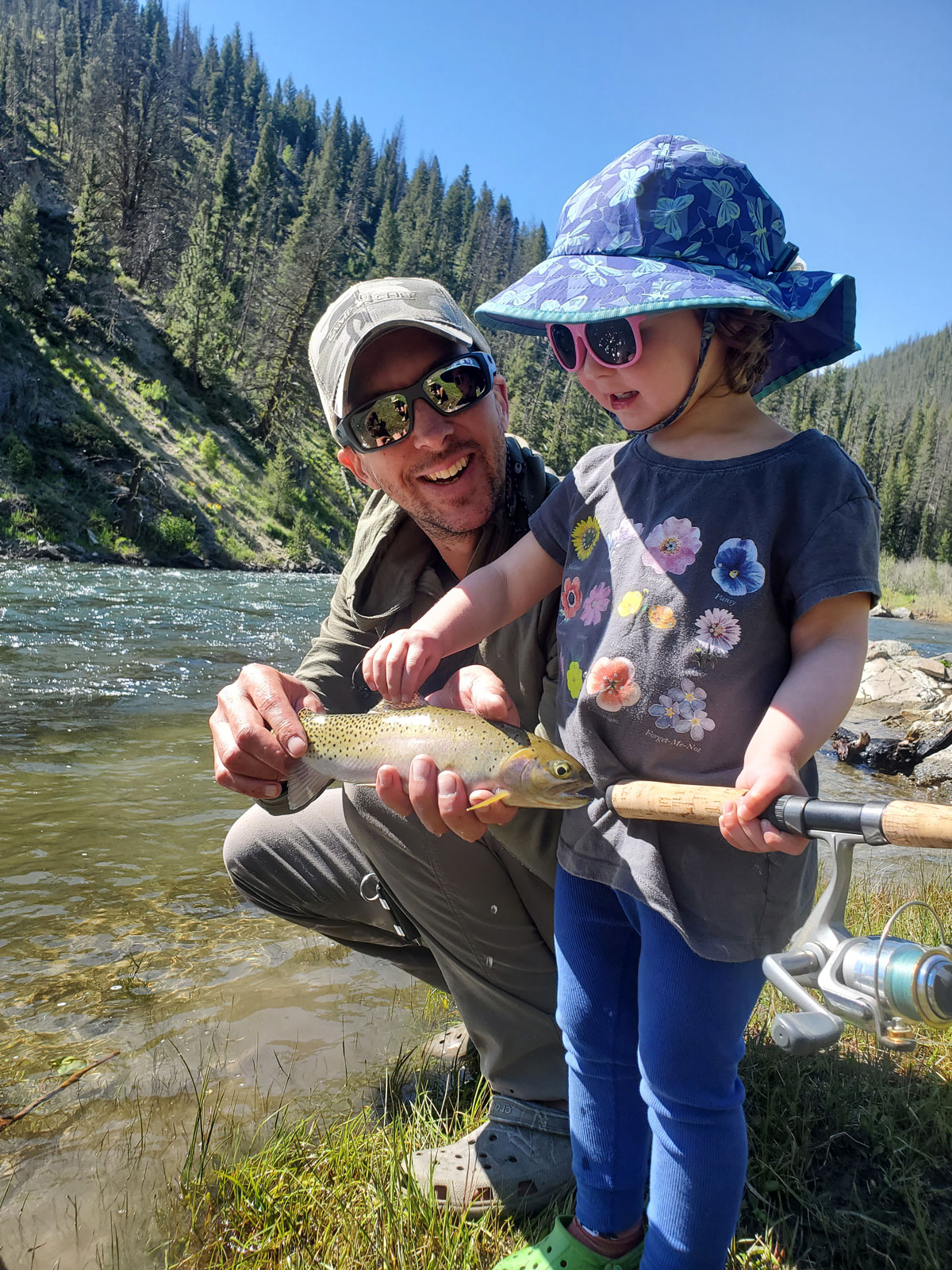
Hockett with a Yellowstone Cutthroat to be excited about.
TRCP: Why should conservation matter to the next generation of hunters and anglers?
Marcus Hockett: So people can continue to enjoy the things they love. I think a lot of people care about wild things and wild places but don’t realize how threatened they actually are. All too often we hear about how much better things used to be “back in the day.” It’s not easy, but if enough people care about conservation, it is possible to make things better in the future.
Photo credit: Marcus Hockett
The TRCP is your resource for all things conservation. In our weekly Roosevelt Report, you’ll receive the latest news on emerging habitat threats, legislation and proposals on the move, public land access solutions we’re spearheading, and opportunities for hunters and anglers to take action. Sign up now.
Theodore Roosevelt Conservation Partnership Welcomes Four New Members to Its Board of Directors
Experts in conservation, policy, and business join the leadership team
(Washington D.C.) – The Theodore Roosevelt Conservation Partnership is pleased to announce the appointment of four new directors to its leadership team. Meredith Baker, Lindsey Davis, Jack Hazel, and Tony Wasley join the 29-member board that oversees TRCP.
Additionally, longtime TRCP Board Member, Matt Cook, has been elected as the new TRCP Board Chair following the tenure of Alston Watt. Cook is the CEO of SquareTop Capital Partners LLC and has decades of executive and investment experience leading and advising growth-oriented companies, along with a proven track record of strategic leadership and organizational stewardship.
“TRCP is privileged to welcome these four new members to our Board of Directors,” said Matt Cook, TRCP board chair. “Their diverse experience and perspectives will strengthen our organization and help advance our work to conserve hunting, fishing, and the wild places that matter to future generations.”
TRCP continues to rise to the challenge originally set forth by our founder, Jim Range – to unite and amplify our partners’ voices to advance America’s legacy of conservation, habitat, and access. Since our inception almost 25 years ago, TRCP has become the most effective coalition of conservation organizations in the country, all united around Theodore Roosevelt’s conservation legacy.
“We’re pleased to welcome these accomplished leaders and dedicated conservation advocates to the TRCP family,” said Joel Pedersen, president and CEO of the TRCP. “Our Board of Directors strengthens and guides our work, helping us unite partners and advance conservation, habitat, and access across the country. I appreciate Alston’s leadership over the last 2 years and look forward to the passion that Matt will bring as Chair. With Meredith, Lindsey, Jack, and Tony joining the Board, TRCP is well positioned to continue delivering on our mission to guarantee all Americans quality places to hunt and fish.”
Bios for the incoming board members can be found below. To read more about TRCP’s full Board of Directors and leadership team, click HERE.
Meredith Baker
Meredith Attwell Baker was President and CEO of CTIA, the Wireless Association, for 11 years. Prior to that, she was appointed by President Barack Obama as a Commissioner of the Federal Communications Commission. Prior to joining the FCC, Meredith served in the Bush Administration as the Acting Assistant Secretary of Commerce for Communications and Information as well as the Acting Administrator of the National Telecommunications and Information Administration (NTIA).
Meredith serves on multiple boards, including the Economic Club of Washington, the National Alliance to End Homelessness and St. Christopher’s by the Sea. She has received multiple honors and awards including: Washingtonian’s Most Powerful Women in Washington, Tech Titans and Most Influential People; Washington Business Journal’s Women Who Mean Business, Fierce Wireless’ Most Powerful People in Wireless, The Hill’s Top Lobbyist and Washington & Lee University’s Distinguished Alumni. In 2023, she was inducted into the Wireless Hall of Fame.
Meredith holds a B.A. from Washington & Lee University and a law degree from the University of Houston. She is a member of the Texas State Bar.
Lindsey Davis
Lindsey Davis is an outdoor recreation and conservation leader based in Salt Lake City, Utah. Her career in the outdoor industry began when she founded Wylder Goods. For five years, she served as CEO, leading the only women-specific online retailer in the outdoor industry and the first female-founded benefit corporation in the state of Utah. During this time, she also graduated from the Goldman Sachs 10,000 Small Businesses program. Following Wylder, Lindsey served as Senior Vice President of the Outdoor Recreation Roundtable, where she helped establish the organization as the nation’s leading coalition of outdoor recreation trade associations and businesses.
Lindsey is the Director of Conservation at SITKA Gear and serves on several national conservation boards. An avid outdoorswoman, she spends as much time outside as possible—whether bowhunting, gravel biking, or sharing the joys of nature with her toddler.
Jack Hazel
Jack has built a distinguished career in construction, environmental services, and land stewardship. He spent 25 years with William A. Hazel, Inc., working in site construction, including 10 years as President, where he led an organization of more than 1,000 employees. He later founded Angler Environmental, a firm specializing in wetland construction and stream restoration projects, as well as Angler Construction, a site development company he led for a decade. Jack is currently the owner of Angler Development, which he has successfully operated for more than 25 years.
In addition to his professional leadership, Jack has held numerous civic and nonprofit leadership roles. He has served as President of the Heavy Construction Contractors Association, President of the Young Presidents’ Organization, Chairman of Highland School in Warrenton, Virginia, and as a member of the Board of Trustees for the Meadows Outdoor Foundation in The Plains, Virginia. He has also served on the Board of Directors for Claude Moore Colonial Farm at Turkey Run in McLean, Virginia.
Jack graduated from St. Stephen’s School in Alexandria, Virginia, and earned a Bachelor of Science in Forestry from The University of the South in Sewanee, Tennessee, in 1979.
Tony Wasley
Tony Wasley currently serves as the President and CEO of the Wildlife Management Institute (WMI), a non-profit conservation organization founded in 1911 and dedicated to science-based, professional wildlife management. WMI continues to serve as the think tank for conservation in exploring topics like conservation relevancy and compiling a comprehensive set of foundational elements for conservation’s future. Tony is actively involved with the American Wildlife Conservation Partners, sits on the board for the Council to Advance Hunting and Shooting Sports, chairs the Executive Committee for Conservation without Conflict, and has previously served as a member of Theodore Roosevelt Conservation Partnership’s Policy Committee. He is a professional member of the Boone and Crockett Club and The Wildlife Society.
Three members also concluded their time with the TRCP Board of Directors in December: Chris Metz, KC Walsh, and Terry Hamby. Their dedication to the TRCP mission and efforts to help advance America’s legacy of conservation, habitat, and access are to be applauded.
The TRCP is your resource for all things conservation. In our weekly Roosevelt Report, you’ll receive the latest news on emerging habitat threats, legislation and proposals on the move, public land access solutions we’re spearheading, and opportunities for hunters and anglers to take action. Sign up now.
TRCP’s “In the Arena” series highlights the individual voices of hunters and anglers who, as Theodore Roosevelt so famously said, strive valiantly in the worthy cause of conservation.
Zack Williams
Hometown: Missoula, MT Occupation: Editorial and Brand Manager for Backcountry Hunters & Anglers Conservation credentials: A lifelong angler and hunter, Williams has been a steelhead guide in the Pacific Northwest and is the founding editor of Swing the Fly. Williams used this expertise and passion for conservation to find a job working in the hunt-fish nonprofit space.
Zack Williams garnered his maniacal angling mindset from a childhood in the water-logged state of Michigan. This fanatic pursuit received a steroid shot to the arm when he found the steelhead rivers of the Pacific Northwest and took a foray down the Andes chasing trout. Now Williams has settled in Montana and scrambles through hellholes looking for elk and mule deer when he’s not standing up for public lands and hunter and angler access in his role at Backcountry Hunters & Anglers.
Here is his story.
TRCP: How were you introduced to hunting, fishing, and the outdoors? Who introduced you?
Zack Williams: I was fortunate. My dad had me waiving around a fly rod at the age of two. By the time I was five he was taking me smallmouth fishing on our local Michigan river upwards of five nights a week. When I wanted to start bowhunting at 12, he picked it up with me. I owe him a tremendous debt of gratitude – and my mom as well for allowing us to disappear at will to fish and hunt.
Williams happy before a long, dark packout.
TRCP: Tell us about one of your most memorable outdoor adventures.
Zack Williams: Being a weekend warrior these days, I cherish the memories of extended periods spent detached from the hustle of modern life. A few cherry examples are four months in Argentina chasing trout down the length of the Andes in my 20s; two summers spent living out of a tiny camper from Oregon’s North Umpqua River to Michigan up to Jasper, Canada, and across the West with my wife, two large dogs and a cat; a fall and winter spent living in a tiny backpacking tent with my dog chasing steelhead across the Northwest. I look forward to future opportunities to detach like that again, hopefully with my wife and daughter if they’re interested.
TRCP: If you could hunt or fish anywhere, where would it be and why?
Zack Williams: I’m always curious about what lies over the next ridge. Rather than dream of faraway lands, I think I’d choose somewhere I’ve never explored here in Montana, free of roads and with lots of downed trees, nasty November weather and minimal people, to chase elk or mule deer.
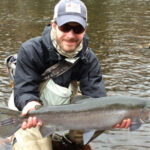
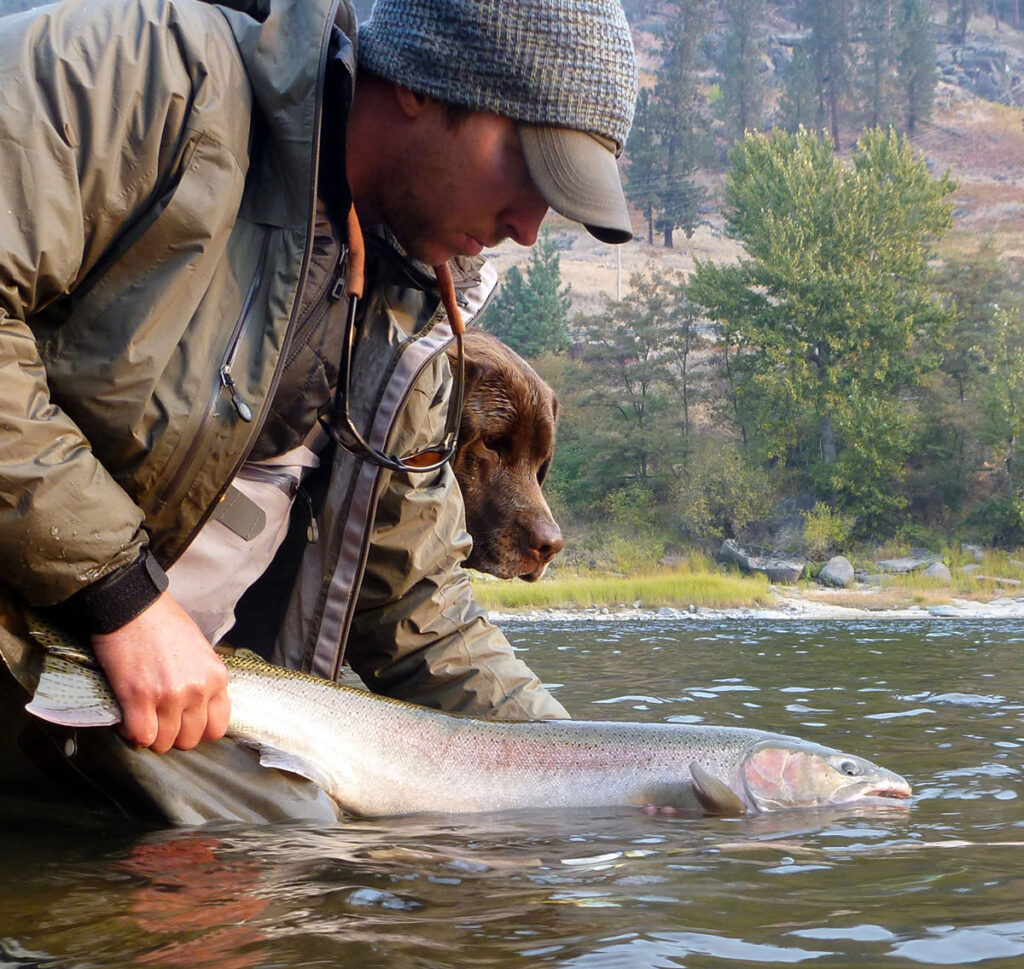
The gift of a PNW steelhead.
TRCP: How does conservation help enhance your outdoor life?
Zack Williams: Everything I value, outside of family, can be directly traced to wild public lands and clean, cold water. Conserving those is everything to me.
TRCP: What are the major conservation challenges where you live?
Zack Williams: There are a lot of important issues at the forefront right now, but for me, number one is saving the Roadless Rule. So many of the quality experiences – and so much of the quality wildlife habitat – we have are dependent on having roadless tracts of public land. Beyond that, fiscally, it just doesn’t make sense to build more roads when we don’t have the funding to maintain the ones we have. There’s a lot of misunderstanding concerning the Roadless Rule – what it does and what it doesn’t do. I hope hunters, anglers and policymakers will take the time to understand the facts about it before the next comment period in the spring of 2026.
Williams and his daughter, Cora, with a Westslope cutthroat.
TRCP: Why is it important to you to be involved in conservation?
Zack Williams: I have a young daughter and would like her to have the chance to experience wild public lands and waters like I have. Beyond that, it just feels like the right thing to do.
TRCP: Why should conservation matter to the next generation of hunters and anglers?
Zack Williams: Once these places are gone, they aren’t coming back. As the man TR himself said in my favorite part from the Man in the Arena speech: “Far better it is to dare mighty things, to win glorious triumphs, even though checkered by failure, than to take rank with those poor spirits who neither enjoy much nor suffer much, because they live in the gray twilight that knows neither victory nor defeat.”
Apathy is not an option these days when it comes to conservation – and a whole lot of other things it seems. I don’t think we have a choice unless we’re OK with seeing it all go away. Maybe it’s always been that way, but to me it feels like we’re at a very critical moment for public lands and waters. We need a new generation of leaders to stand up like those before us did.
Photo credit: Zack Williams
The TRCP is your resource for all things conservation. In our weekly Roosevelt Report, you’ll receive the latest news on emerging habitat threats, legislation and proposals on the move, public land access solutions we’re spearheading, and opportunities for hunters and anglers to take action. Sign up now.
The Tongass Assessment Report Balances the Needs of Hunters, Anglers, and Other Users
TRCP commends the Forest Service for its emphasis on assuring healthy fish and wildlife habitat and ensuring continued access and recreation opportunities for local and visiting hunters and anglers
The Forest Service recently released the Tongass National Forest Plan Assessment Report, which highlights the agency’s focus on strong watershed conservation for salmon, deer habitat restoration through science-based forestry, reliable access for traditional and recreational use, and continued collaboration with Tribes, local communities, and conservation partners. TRCP commends the Forest Service for its emphasis on assuring healthy fish and wildlife habitat and ensuring continued access and recreation opportunities for local and visiting hunters and anglers.
“The overarching vision for the Tongass, as shown by the public feedback results, is that it remains a healthy ecosystem,” the Forest Service writes. “When viewed as an entire 17-million-acre region, the Tongass National Forest has retained natural ecosystem processes to a degree far greater than most National Forests in the Lower 48 states. There have not been wholesale changes in natural processes in Southeast Alaska, and it is one of the last places where natural salmon runs thrive.”
The report is one of the first steps in revising the Tongass Land and Resource Management Plan (also called the Forest Management Plan). The plan highlights priorities to guide the next chapter in managing America’s largest and wildest national forest.
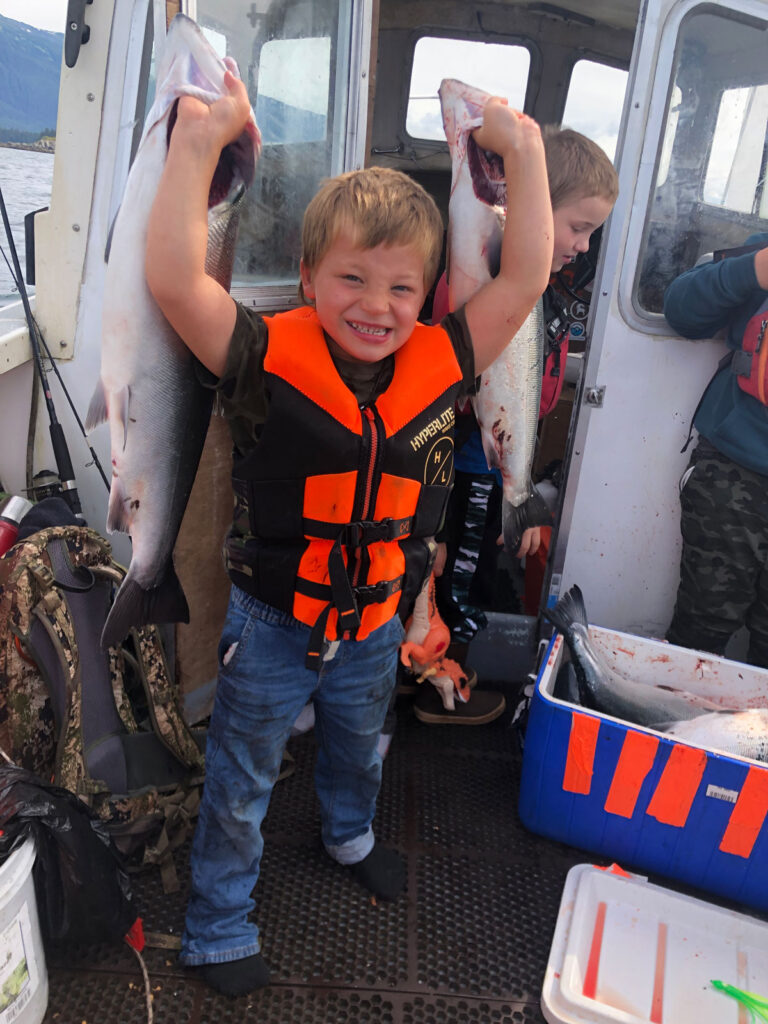
Big forest, big salmon, big smiles.
Big, Wet, and Wild
The Tongass National Forest, encompassing most of Southeast Alaska, is what locals call a working forest. Roughly 72,000 people live in 32 communities within the Forest’s boundaries. Salmon are the backbone of the region’s ecosystem. All five species of Pacific salmon spawn in the Tongass’s 3,000 plus streams, and these fish provide the foundation for many of the region’s economic opportunities, supporting commercial fishing, tourism, and the hunting and fishing lifestyle. Around 2.3 million visitors come to the Tongass each year to experience the scenery and outdoor opportunities, which are all tied to a well-functioning ecosystem.
Locals live alongside some of the wildest and most intact lands in America. The forest supports a robust population of Sitka blacktail deer, mountain goats, and brown and black bears. Southeast Alaska’s remaining old growth forests are key to the health of salmon streams and winter habitat for deer and goats that support hunting and fishing.
In this assessment, the Forest Service is focused on adaptive management to meet the challenges of a variety of environmental changes, like expected increases in temperature, rainfall, flooding, and landslides that will affect fish habitat, deer populations, and access routes.
Exciting Changes
The Tongass has reached a pivotal moment of its management where millions of acres of young growth forest are now ready for commercial harvest that could also restore wildlife habitat. The Forest Service’s report makes it clear that Tribes and Alaska Native Corporations have requested this approach to forest management. Other public input has also supported young growth timber harvests that improve browse habitat and support local sawmills. While salmon stream restoration work has been conducted for the last few decades with positive results, the focus on forest restoration to benefit deer and other wildlife is more recent. Restoration is building momentum, creating jobs, and is something locals and visiting outdoorsmen and women are excited to see enacted.
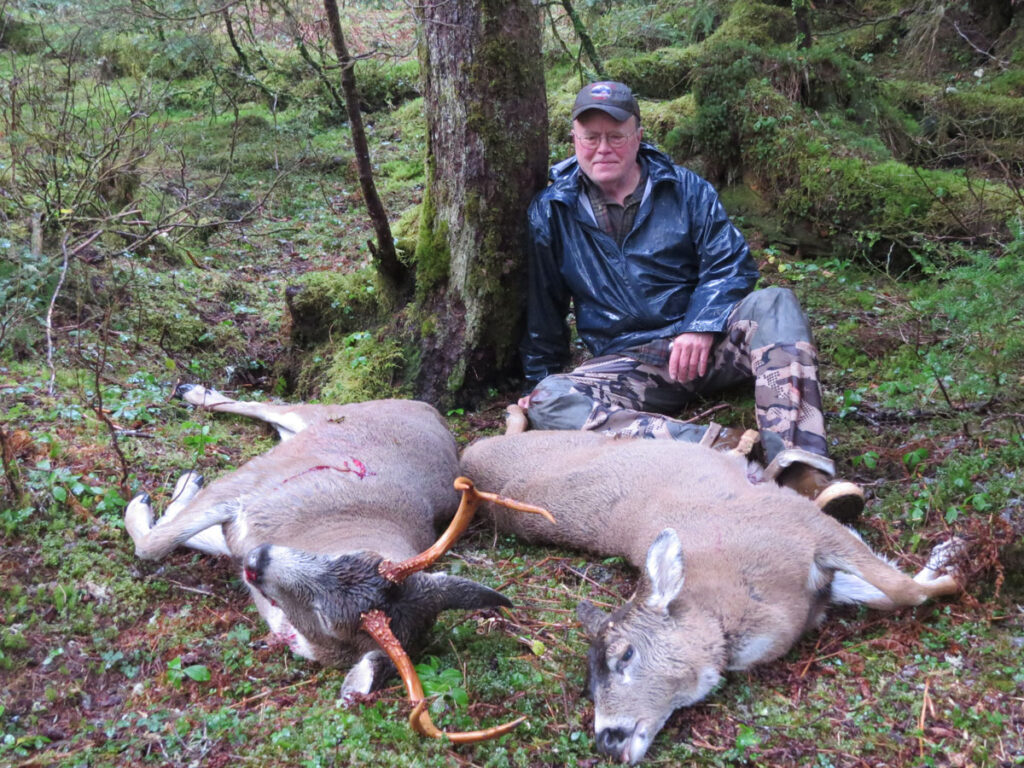
Young growth timber harvests can improve browse habitat for Sitka blacktails and support local sawmills.
Maintain Existing Roads
The Tongass has thousands of miles of existing roads. The budget for road maintenance is underfunded, and many roaded areas lack maintained access. The report highlights the importance of maintaining and repairing roads, trails, docks, and campsites for access to hunting and fishing grounds. The monitoring of road culverts is also important to prevent fish blockages, and surveying aquatic species and habitat restoration is important to sustain the ecosystems that hunters and anglers rely on.
The report notes that road construction, as well as mining and tourism growth, all carry risks for aquatic habitat if not managed carefully. The revised plan could strengthen standards and guidelines to conserve fish-bearing streams and surface resources.
A Path to a Positive Future Depends on All of Us
It’s no easy task to balance different users’ interests, but the Forest Service’s report shows that the agency is invested in a strong, working future for Southeast Alaska. It’ll be an exciting future for America’s largest national forest if the report’s priorities are adopted into the revised Tongass Forest Management Plan. To ensure this result, it is even more important that the hunting and fishing community stay engaged. There will be more public comment periods as revisions continue.
Photo Credit: Bjorn Dihle
HOW YOU CAN HELP
TRCP has partnered with Afuera Coffee Co. to further our commitment to conservation. $4 from each bag is donated to the TRCP, to help continue our efforts of safeguarding critical habitats, productive hunting grounds, and favorite fishing holes for future generations.