July 8, 2025

2024 Gulf Menhaden Bycatch Study Offers Insights into Number of Fish Killed 

Data suggest 22,000 or more mature redfish and a host of other sportfish, forage fish killed annually by pogy boats off Louisiana

(BATON ROUGE, La.)— A 2024 study on bycatch in the industrial Gulf menhaden fishery indicates that approximately 22,000 breeding-size redfish, tens of millions of non-target forage fish, and scores of other species were killed by the industry off Louisiana’s coast last season. The study findings, presented by researchers today to the Louisiana Wildlife and Fisheries Commission, revealed that 45 or more species, including black drum, seatrout, and cownose rays, were observed and counted in pogy boat nets.  

Also of note, the study estimated approximately 81 million croaker and 25 million sand seatrout, known by local anglers as “white trout,” were killed and retained by the Gulf menhaden reduction industry in 2024. Both species are targeted by recreational anglers and serve as important “forage,” or a food source, for a host of sportfish and other wildlife.

Recreational angling in Louisiana provides $3.7 billion annually in economic contributions. A large portion of that is due to redfish, as one of the most targeted recreational species in the state and its only saltwater gamefish. 

Industrial menhaden vessels suctioning catch from a net. Credit: CosmoVision Media

“This very thorough examination of the pogy industry is the best science gathered to date on the effects of the extensive industrial fishing on fish like redfish, black drum, white trout, croaker, and many other important gamefish and sportfish and the food they eat,” said Chris Macaluso, director of the Center for Fisheries and Mississippi River Programs for the Theodore Roosevelt Conservation Partnership and a life-long, avid Louisiana angler. “The results are concerning, especially given the efforts underway for the last year to make Louisiana’s redfish population healthier by ending the recreational harvest of large, breeding size redfish. Louisiana’s sportsmen and other conservation advocates applaud the Louisiana legislators, Louisiana Department of Wildlife and Fisheries staff, the Gulf States Marine Fisheries Commission, and the researchers who conducted the study for ensuring it was a rigorous and thorough effort and for being transparent with the results.”

The study, funded by the Louisiana Legislature in 2022, administered by the Gulf States Marine Fisheries Commission, and conducted by LGL Ecological Research Associates, Inc., during the 2024 fishing season, was designed to determine the scale of impacts that the Gulf menhaden fishery has on non-targeted species that eat and live in the same waters as menhaden – a small, abundant baitfish also known as pogies – such as redfish and speckled trout. Specifically, researchers assessed how many non-target species, known as bycatch, were killed after they were netted while feeding on menhaden schools or simply due to swimming among pogy schools.

Bull redfish feeding on forage in the Gulf. Credit: David Mangum

The study focused on the 2024 menhaden fishing season, during which the reduction industry made 13,144 nets sets, a relatively low number when compared to the average number of sets made by the industry in recent years. Researchers gathered samples from just over 3 percent of sets made (418 of the 13,144 sets). They also used a combination of direct observation and cameras to view the entire pogy fishing process. They counted the number of predator and other species caught as bycatch in nets and recorded which of those continued through the harvesting process, which includes suctioning fish out of the net, through a chute, and into the ship’s hold. The team determined bycatch mortality rates by holding experiments and dart-tagging surviving fish that were released alive from the nets.  

Redfish bycatch data have been of particular interest to recreational angling and charter boat operators due to restrictions in place for the past year. Anglers have been prohibited from harvesting bull redfish, or individuals over 27 inches in length, since June of 2024 to help rebuild declining redfish populations. Louisiana’s redfish slot limit was tightened and the creel limit reduced from five to four fish as well.

“This close examination of industrial menhaden fishing has been desperately needed to help understand the full extent of redfish and forage fish mortality,” said Richard Fischer, CEO for the Louisiana Charter Boat Association. “Charter captains’ conflicts with the menhaden purse seining boats aren’t just about places to fish but also the redfish and other sportfish and forage fish being killed, which our members, unfortunately, often see firsthand. The number of redfish killed annually is especially concerning since recreational fishermen have seen limits reduced and have ended the harvest of breeding-sized redfish in Louisiana to help strengthen redfish populations. The Louisiana Charter Boat Association thanks the Louisiana Legislature, the Gulf States Marine Fisheries Commission, and LGL Ecological Research Associates for supporting and conducting this thorough study.”

An Atlantic croaker. Credit: Chesapeake Bay Program

Of the 3.2 percent of total sets that were observed throughout the 2024 season, 865 redfish were caught as bycatch but remained inside the net and were later released, or “rolled over” with approximately 17 percent of them dying as a result of being trapped in the net. An additional 671 redfish were extracted from the water during the suctioning process and ran through a chute designed to separate larger bycatch.  Approximately 98 percent of these “chute bycatch” fish did not survive.

For reference, “rollover bycatch” refers to non-target fish that remain in the water in the seine net after the main catch is pumped out, and before the net is opened for them to swim away. Generally, these fish are too large to be sucked into the hose. “Chute bycatch” refers to non-target fish that have been extracted from the net via a suction hose, sent up a chute and are then separated from the main catch by a large grate and released back into the water before they would end up in the hold. Generally, these fish are too large to pass through the grate. “Retained bycatch” refers to non-target fish that pass through the grate and end up in the hold along with the main catch; these fish experience 100 percent mortality.

An overview of the bycatch study findings can be viewed here. More information about the ecological and recreational importance of Gulf menhaden is available on TRCP’s Forage Fish Recovery Page.
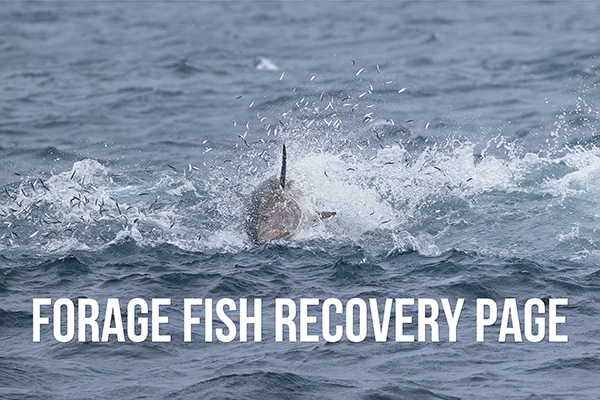
Banner image courtesy David Mangum
4 Responses to “2024 Gulf Menhaden Bycatch Study Offers Insights into Number of Fish Killed ”

  1. Garth Walker

    Omega, protein, and Daybrook fisheries are the most destructive fisheries on the planet Earth. They’re sucking up the Gulf of Mexico for each fish to make fish meal to feed and produce toxic fish farms! Both fisheries are owned by foreign companies Cook Inc. A Canadian based fishery and the South African company owns Daybrook! They are killing all our fish! Jones Act prohibits foreigners from owning and running American flag vessels in our waters! They have the Gulf States Marine fishery commission protecting them! No limits no observers! They are killing food for hundreds of species, grinding it up with toxic chemicals and feeding chickens , hogs, cattle, dog n cats! These species of animals are not supposed to eat fish! End the menhaden fishing now!

  2. Garth Walker

    They get an incidental kill permit From NOAA. They kill up to 75 dolphin every year legally! The real numbers are much higher as far as bicatch. Some old NOAA reports as high as 70 percent bicatch. The Gulf StatesMarine Fisheries Commission is a front and cover for the fishery. Omega and Daybrook sit on the board. The use false scientific reports to back their lies! Shut them down! They take 4000 pounds of fish for every man woman and child in The Mississippi Gulf Coast! Billionaire crooks

  3. Garth Walker

    GSMFC was conceived to protect Omega Protien. A young George Bush was very smart and clever, using his political stroke to protect his boats and make it a complete monopoly! I studied this industry relentlessly for 4 years, they threatens my family as I instigated change. Mofia is what many locals call them!

Do you have any thoughts on this post?

XHTML: You can use these tags: <a href="" title=""> <abbr title=""> <acronym title=""> <b> <blockquote cite=""> <cite> <code> <del datetime=""> <em> <i> <q cite=""> <s> <strike> <strong>

Comments must be under 1000 characters.

by:

posted in: Press Releases

July 7, 2025

TRCP Applauds Order Establishing Make America Beautiful Again Commission

Make American Beautiful Again Commission will seek to advance initiatives that are key priorities for hunters and anglers

On Thursday, July 3, President Donald J. Trump announced the creation of the Make America Beautiful Again Commission by Executive Order. The commission aims to implement a strategic approach to conservation and recreation while seeking to ensure that federal agencies take action to revitalize America’s lands and waters. 

“By aligning efforts across agencies, states, conservation organizations, and private partners, we can better deliver outcomes that benefit fish and wildlife habitat, recreational access, working forests, water quality, and our public lands,” said Joel Pedersen, president and CEO of the Theodore Roosevelt Conservation Partnership. “We thank President Trump for recognizing that land and water priorities are vital to sustaining outdoor traditions for future generations. We look forward to working with the administration to ensure its implementation.”  

The Commission will be chaired by the Secretary of the Interior with the Assistant to the President for Domestic Policy serving as Executive Director and include the following officials or their designees: the Secretary of Defense, the Secretary of Agriculture, the Administrator of the Environmental Protection Agency, the Director of the Office of Management and Budget, the Chairman of the Council of Economic Advisers, the Assistant to the President and Chief of Staff, the Assistant to the President for Economic Policy, the Chair of the Council on Environmental Quality, and other members of the Administration invited to participate, at the discretion of the Chair and the Executive Director. 

Among other directives, the Make American Beautiful Again Commission will seek to advance initiatives that are key priorities for hunters and anglers, such as protecting water resources, restoring forests and natural habitats, recovering America’s wildlife, enhancing hunting, fishing, and outdoor recreation on public lands. 

As we approach the 250th anniversary of our nation, TRCP is encouraged to see this administration recognize that conservation and management of our public lands and natural resources remain one of the greatest American privileges.  


The TRCP is your resource for all things conservation. In our weekly Roosevelt Report, you’ll receive the latest news on emerging habitat threats, legislation and proposals on the move, public land access solutions we’re spearheading, and opportunities for hunters and anglers to take action. 

Click here to sign up today.

by:

posted in: Press Releases

July 1, 2025

Hunters and Anglers Applaud EXPLORE Act Implementation by Secretary Burgum

Directive brings historic outdoor recreation law to life, unlocking new opportunities and access for public land users across the country

Last week, U.S. Secretary of the Interior Doug Burgum signed Secretarial Order 3435, officially implementing the Expanding Public Lands Outdoor Recreation Experiences (EXPLORE) Act. The EXPLORE Act is a comprehensive legislative package passed early in 2025 that would expand access opportunities to a variety of public land users, streamline permitting processes for businesses focused on providing recreation opportunities, and modernize outdoor infrastructure. Its implementation marks a historic step forward in expanding outdoor recreation access and modernizing federal recreation policy across the country. 

“TRCP joins hunters, anglers, and the millions of other Americans who recreate on public lands and waters in thanking Secretary Burgum for implementing this important bipartisan legislation,” said Joel Pedersen, president and CEO of the Theodore Roosevelt Conservation Partnership. “The EXPLORE Act will have a lasting impact on the continued growth of the $1.2 trillion outdoor recreation economy as it continues to evolve in the 21st century. Its implementation will ensure that the agencies and the public have the support and tools they need to make the most of their days outdoors.”   

Among many other things, the EXPLORE Act:    

  • Expands availability of public target shooting ranges on BLM and Forest Land.  
  • Improves road and trail transportation maps on federal land, benefiting motorized and nonmotorized access. 
  • Allows states, counties, and Tribes to conduct recreation infrastructure enhancement or improvements on public lands through Good Neighbor Agreements.   
  • Improves federal coordination and provide assistance to non-federal partners in preventing the spread of aquatic invasive species.   

TRCP works to maintain and strengthen the future of hunting and fishing by uniting and amplifying our partners’ voices in conserving and restoring wildlife populations and their habitat as challenges continue to evolve. 

Top photo: Josh Metten

Learn more about the outdoor recreation economy HERE


The TRCP is your resource for all things conservation. In our weekly Roosevelt Report, you’ll receive the latest news on emerging habitat threats, legislation and proposals on the move, public land access solutions we’re spearheading, and opportunities for hunters and anglers to take action. Sign up now.

June 30, 2025

TRCP Applauds Legislative Wins for Oregon’s Wildlife, Habitat, and Outdoor Economy

Major investments and policy gains mark a strong 2025 session for conservation, but work left on the table

As the Oregon Legislature adjourns Sine Die, the Theodore Roosevelt Conservation Partnership celebrates a few key legislative victories that will strengthen habitat connectivity and bolster agency capacity.

“This session proved that conservation can unite diverse stakeholders when the focus is clear, the science is strong, and the outcomes benefit the public,” said Tristan Henry, TRCP’s Oregon field representative. “From corridors to core funding, conservation policy built broad, bipartisan coalitions.”

Wildlife Connectivity Policy Passed (HB 2978)

HB 2978 establishes formal coordination between the Oregon Department of Fish and Wildlife and Oregon Department of Transportation on wildlife movement and habitat connectivity. The law ensures a long-term, science-based strategy for planning and implementing wildlife crossing and corridor projects statewide.

Next Steps on Wildlife Crossing Funding

The legislature’s anticipated capstone for the 2025 session, a comprehensive transportation package that included funding for wildlife crossing infrastructure, fell short in the final hours of the session. While this outcome is disappointing, the inclusion of wildlife crossing investments in the proposal represents meaningful progress and growing recognition of the issue among state leaders. TRCP and our partners remain committed to advancing these provisions in the next available opportunity, whether during the 2025 short session or in a potential special session this fall.

Stable Agency Funding Secured

The Oregon Legislature passed HB 5009, which provides essential base budget allocations for the Oregon Department of Fish and Wildlife. These funds will allow the agency to maintain staffing, monitoring, and habitat work critical to its mission. TRCP supported this bill to ensure that ODFW can continue at as close to current service levels as possible.

In tandem with this, HB 2342 will increase hunting and fishing license and tag fees to reflect inflation and support service-level stability. While no one in the sporting community welcomes higher costs, this user-based model remains foundational to fish and wildlife management in Oregon and partner organizations like the Oregon Hunters Association  provided key support to help safeguard the agency’s financial footing.

Effort to Fund Oregon’s State Wildlife Action Plan Falls Short

HB 2977 aimed to establish Oregon’s first dedicated, state-managed funding source for the State Wildlife Action Plan. The bill earned broad, bipartisan support and backing from a wide range of stakeholders. Despite this momentum, it was ultimately blocked through procedural maneuvering late in the session.

Advancing Aquatic Invasive Species Protections

Oregon has officially updated its aquatic invasive species (AIS) permitting system with the passage of HB 2982. This new law closes long-standing loopholes by requiring all watercraft, regardless of size, to carry an AIS permit, ensuring shared responsibility among all users of Oregon’s waterways.

TRCP played a key role in supporting this legislation, submitting multiple rounds of testimony and drawing on national findings from our Aquatic Invasive Species Commission. The law will strengthen inspection programs, bolster funding for early detection and response, and position Oregon to align with emerging federal guidance under the Explore Act.

Other Actions

Even in a contentious session, meaningful progress was made. Lawmakers approved HB 3940B, securing critical investments in wildfire preparedness and forest resilience. We commend our partners for leading this effort and helping ensure Oregon is better equipped for future fire seasons. Earlier in the session, HB 3846, a proposal to allow state leasing of the federally managed Ochoco National Forest, was stopped in committee. While the bill did not advance, it highlighted ongoing threats to foundational public land protections under NEPA, FLPMA, and the Wilderness Act.

TRCP will continue working alongside state and federal partners, private landowners, and fellow sporting organizations to ensure these wins are effectively implemented, and that Oregon’s public lands and wildlife remain protected for future generations.

“Our outdoor traditions and our economy all depend on healthy fish and wildlife populations,” said Henry. “Oregon took meaningful steps forward this session, and we look forward to building on this momentum.”


The TRCP is your resource for all things conservation. In our weekly Roosevelt Report, you’ll receive the latest news on emerging habitat threats, legislation and proposals on the move, public land access solutions we’re spearheading, and opportunities for hunters and anglers to take action. Sign up now.

by:

posted in: Press Releases

June 28, 2025

TRCP Celebrates Removal of Public Land Sales from Budget Megabill

This critical win for America’s public lands is a testament to the strength and unity of hunters, anglers, outdoor advocates, and conservation-minded lawmakers

Today, the Theodore Roosevelt Conservation Partnership (TRCP) celebrates a critical win for America’s public lands: the removal of proposed public land sales from the Senate version of the budget reconciliation bill. This victory is a testament to the strength and unity of hunters, anglers, outdoor advocates, and conservation-minded lawmakers who stood up for what’s right.

“Hunters and anglers made it abundantly clear that reconciliation is not the appropriate vehicle for public land sales,” said Joel Pedersen, president and CEO of the Theodore Roosevelt Conservation Partnership. “Public lands are a cornerstone of our national heritage, our outdoor traditions, and the economies of countless communities across the country. We’re deeply grateful to Senators Sheehy, Daines, Crapo, and Risch for their leadership and all the lawmakers— including Senator Heinrich— who helped ensure this short-sighted proposal was removed.”

“The removal of public land sales from the budget bill is more than a legislative correction—it’s a reminder of the power of collective advocacy,” Pedersen continued. “This outcome affirms our long-held belief: when we unite, we win.”


The TRCP is your resource for all things conservation. In our weekly Roosevelt Report, you’ll receive the latest news on emerging habitat threats, legislation and proposals on the move, public land access solutions we’re spearheading, and opportunities for hunters and anglers to take action. Sign up now.

HOW YOU CAN HELP

TRCP has partnered with Afuera Coffee Co. to further our commitment to conservation. $4 from each bag is donated to the TRCP, to help continue our efforts of safeguarding critical habitats, productive hunting grounds, and favorite fishing holes for future generations.

Learn More
Subscribe


You have Successfully Subscribed!

You have Successfully Subscribed!

You have Successfully Subscribed!

You have Successfully Subscribed!

You have Successfully Subscribed!