
August 21, 2025

When an Iconic Southwestern River Runs Dry

What hunters, anglers, and conservationists stand to lose as the Rio Grande dries up 

For the second time in just three years, the Rio Grande is running dry in many of its reaches throughout central and southern New Mexico. Barren riverbeds stand as stark reminders that drought and overuse threaten not only the river’s survival but also a way of life for those who depend on it. In areas where water is usually prevalent this time of year, fish are found stranded and drying up in shrinking, murky puddles. Wildlife across the region is losing a crucial water source amid relentless summer heat. At the Theodore Roosevelt Conservation Partnership, we believe restoring reliable flows to this vital river system is essential to sustaining habitats and securing a resilient future for the Southwest. 

It’s no wonder how the Rio Grande got its name. Stretching from its source in the Colorado mountains to the sea, the Rio Grande is the third longest river in the continental United States. It provides drinking water to millions of people across three states and two countries. This diverse river flows from high alpine mountains through deep canyon gorges to serene cottonwood groves and into harsh desert terrain. In an arid landscape, it’s a lifeline for fish and wildlife, Indigenous peoples, traditional agricultural communities, municipalities, as well as hunters, anglers, and other recreational users.  

Water in the Rio Grande is shared by Colorado, New Mexico, and Texas under a legal agreement called the Rio Grande Compact; with each state entitled to a portion. For example, even though Texas is at the downstream end of the river, New Mexico is required to deliver a set amount of water to Texas every year through the compact agreement. As rising temperatures and prolonged drought reduce overall flows, there’s less water to go around. New Mexico is often left with little to no excess water to store in its own reservoirs after mandated deliveries to Texas, this leaves upstream sections vulnerable when natural flows taper off during the hottest part of the year. Additionally, less snowpack in the river’s Colorado headwaters coupled with higher spring temperatures has meant snowmelt-fed flows are smaller and come earlier, leaving just a trickle by the time summer rolls around. While southern sections of the river have historically gone dry later in the summer due to diversions for agriculture and other uses, this kind of early-season drying—especially this far north—is a troubling new pattern.  

These challenges pose real consequences throughout the basin. As flows diminish, critical habitat for fish and wildlife disappears, water quality declines, and recreational opportunities for users including hunters and anglers become fewer. Communities that rely on the river for drinking water, sustenance, and cultural traditions are left facing harsh economic and environmental realities. Part of the TRCP’s work with local and national stakeholders in the basin is to identify and advocate for durable, science-backed solutions to keep water in the Rio Grande so we can safeguard this river system, together. 

Despite its importance, the Rio Grande receives significantly less federal attention and funding for research, infrastructure management, ecological restoration, and conservation efforts than other similarly sized rivers in the country. As part of its ongoing efforts in the Rio Grande Basin, the TRCP continues working to elevate the river’s profile and advance projects and policies that protect sustainable flows and thriving habitats. In my role as the TRCP’s new Rio Grande Program Manager, I’m collaborating with a diverse set of conservation organizations such as American Rivers, National Audubon Society, National Wildlife Federation, World Wildlife Fund, Trout Unlimited, The Nature Conservancy, HECHO (Hispanics Enjoying Camping, Hunting, and the Outdoors) and others to advocate for the federal actions needed to ensure dry riverbeds don’t become the new normal. 

The Rio Grande deserves more than to be treated as an afterthought. Theodore Roosevelt himself prioritized its protection with the creation of the Rio Grande National Forest in 1908, largely to safeguard the river’s headwaters and the resources it sustains. This extraordinary river merits attention, funding, and long-term planning across management areas so that it can continue to support fish and wildlife, cultural traditions, and hunting and angling opportunities for generations to come. By recognizing the Rio Grande’s importance, we are one step closer to helping restore reliable flows and resilience to this iconic river system.  

Learn more about TRCP’s commitment to habitat and clean water HERE

Top photo courtesy of BLM Flickr

Do you have any thoughts on this post?

XHTML: You can use these tags: <a href="" title=""> <abbr title=""> <acronym title=""> <b> <blockquote cite=""> <cite> <code> <del datetime=""> <em> <i> <q cite=""> <s> <strike> <strong>

Comments must be under 1000 characters.

July 15, 2025

TRCP and Conservation Coalition Rally Support for WaterSMART Investments Critical to Western Watersheds

Together, we’re urging Congress to fully fund WaterSMART Programs to advance smart, proven solutions to safeguard water, wildlife, economies, and outdoor traditions 

The Theodore Roosevelt Conservation Partnership (TRCP), along with more than 100 partner organizations, is urging congressional appropriators to support programs that are essential to sustaining critical fish and wildlife habitat and enhancing resilience to prolonged drought conditions in Western watersheds. 

It’s difficult to overstate the ecological and economic importance of the Southwest’s major river systems, such as the Colorado and Rio Grande. These rivers are a lifeline for the region – they supply drinking water and power to tens of millions of Americans, irrigate crops that are distributed nationwide, and support fish and wildlife habitats that sustain thriving hunting and fishing opportunities as well as the 1.2 trillion-dollar outdoor recreation industry. However, as heat, drought, and weather extremes intensify across the West, the health of these rivers, and the communities, economies, and ecosystems that depend on them, are increasingly at risk. 

For this reason, it is crucial that Congress fully fund the Bureau of Reclamation’s WaterSMART programs before these lifelines reach a breaking point. 

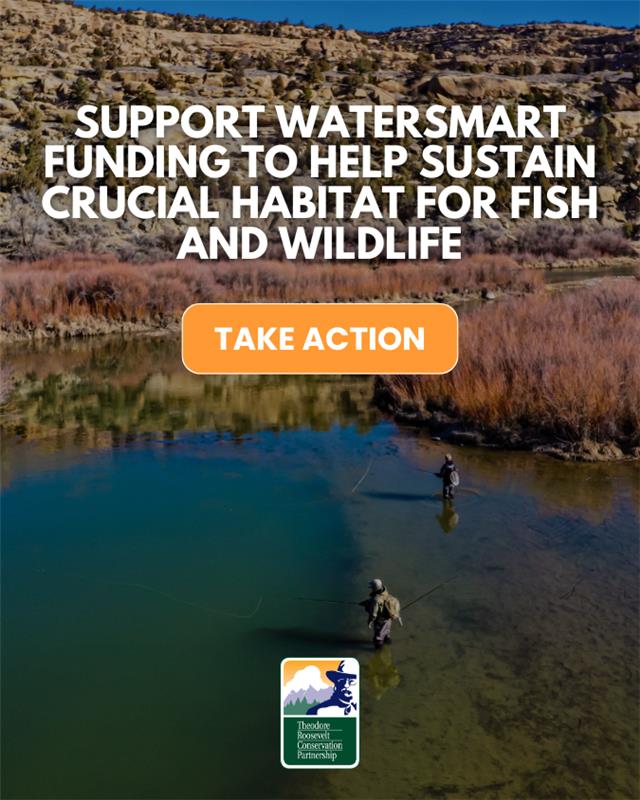
Click HERE to urge your elected officials to support the WaterSMART program.

While Congress finalizes appropriations for the upcoming fiscal year, TRCP is uniting and amplifying the voices of hunting, angling, and conservation minded stakeholders to advocate for continued investment in these vital programs. In a letter submitted this month, TRCP and 103 national, regional, state, and local organizations, representing a wide range of stakeholders across the Colorado and Rio Grande basins, urged Congress to fully fund the WaterSMART program. 

The popular WaterSMART program provides cost-shared funding for projects that protect fish and wildlife habitat while building ecological and community resilience to drought. Since 2010, it has supported 2,364 projects and studies in the West, resulting in an estimated 1.7 million acre-feet of freshwater savings per year, enough to supply 4.6 million people annually. Additionally, the program has helped leverage $8.75 billion in non-federal investments, significantly expanding the reach and impact of water conservation projects. 

WaterSMART funds have advanced proven water-saving solutions, such as upgraded irrigation systems, groundwater storage, and water reuse – all critical tools for communities across the West. These investments also support nature-based solutions that work to mitigate drought and wildfire impacts while enhancing fish and wildlife habitat. Many of the program’s projects offer the dual benefit of water conservation and habitat restoration, providing high returns on investment and helping to prevent emergency water crises, particularly in the Colorado and Rio Grande River basins. 

Highlighted WaterSMART Programs and On-the-Ground Impact 

$15.017 million for Basin Studies 

The Basin Studies Program supports collaborative planning to help partners address imbalances in water supply and demand. For example, the Rio Grande Basin Study, supported by more than 36 signatories, focuses on developing strategies to increase water management resilience under climate change scenarios. 

$8 million for the Cooperative Watershed Management Program (CWMP) 

CWMP helps communities form watershed groups to plan and implement projects that improve watershed health and fish and wildlife habitat. One such example is the Santa Cruz Watershed Collaborative in Tucson, Arizona, who used CWMP funding to strengthen local drought response efforts and increase water resilience while protecting habitat for numerous species such as quail and javelina. 

$6.5 million for the Aquatic Ecosystem Restoration Program 

The Aquatic Ecosystem Restoration Program provides cost-shared funding to states, Tribes, and stakeholders for large-scale aquatic restoration projects. In Nevada, the Southern Nevada Water Authority used funding to build erosion control structures and in-stream habitat in the Lower Las Vegas Wash within the Lake Mead National Recreation Area. This project benefits multiple species, including the federally endangered southwestern willow flycatcher, the Yuma Ridgway’s rail, and the threatened, yellow-billed cuckoo, while improving spawning habitat for the razorback sucker. 

$54 million for WaterSMART Grants 

WaterSMART Grants fund a variety of water supply solutions, including the Environmental Water Resources Program (EWRP), which supports nature-based projects that deliver sustained water savings and ecosystem benefits. For example, the Chama Peak Land Alliance used EWRP funding to thin approximately 2,150 acres of forest to protect key source watersheds for the San Juan-Chama Project and the headwaters of the Rio Chama and Rio Brazos—efforts that also mitigate future wildfire impacts. 

As drought conditions in the West grow more severe, consistent annual funding for WaterSMART programs is more important than ever. TRCP and its partners across the Western U.S. are urging Congress to make this critical investment in our water future, for the health of our communities, ecosystems, and economies. 

Take action below and urge your elected officials to support the WaterSMART program. 

July 7, 2025

TRCP Applauds Order Establishing Make America Beautiful Again Commission

Make American Beautiful Again Commission will seek to advance initiatives that are key priorities for hunters and anglers

On Thursday, July 3, President Donald J. Trump announced the creation of the Make America Beautiful Again Commission by Executive Order. The commission aims to implement a strategic approach to conservation and recreation while seeking to ensure that federal agencies take action to revitalize America’s lands and waters. 

“By aligning efforts across agencies, states, conservation organizations, and private partners, we can better deliver outcomes that benefit fish and wildlife habitat, recreational access, working forests, water quality, and our public lands,” said Joel Pedersen, president and CEO of the Theodore Roosevelt Conservation Partnership. “We thank President Trump for recognizing that land and water priorities are vital to sustaining outdoor traditions for future generations. We look forward to working with the administration to ensure its implementation.”  

The Commission will be chaired by the Secretary of the Interior with the Assistant to the President for Domestic Policy serving as Executive Director and include the following officials or their designees: the Secretary of Defense, the Secretary of Agriculture, the Administrator of the Environmental Protection Agency, the Director of the Office of Management and Budget, the Chairman of the Council of Economic Advisers, the Assistant to the President and Chief of Staff, the Assistant to the President for Economic Policy, the Chair of the Council on Environmental Quality, and other members of the Administration invited to participate, at the discretion of the Chair and the Executive Director. 

Among other directives, the Make American Beautiful Again Commission will seek to advance initiatives that are key priorities for hunters and anglers, such as protecting water resources, restoring forests and natural habitats, recovering America’s wildlife, enhancing hunting, fishing, and outdoor recreation on public lands. 

As we approach the 250th anniversary of our nation, TRCP is encouraged to see this administration recognize that conservation and management of our public lands and natural resources remain one of the greatest American privileges.  


The TRCP is your resource for all things conservation. In our weekly Roosevelt Report, you’ll receive the latest news on emerging habitat threats, legislation and proposals on the move, public land access solutions we’re spearheading, and opportunities for hunters and anglers to take action. 

Click here to sign up today.

June 24, 2025

TRCP Applauds America’s Longleaf 2024 Report: A Win for Hunters, Anglers, and Wildlife

2024 report highlights gains from Longleaf Pine restoration, boosting biodiversity, habitat resilience, and opportunities for hunting and fishing.

The Theodore Roosevelt Conservation Partnership (TRCP) commends America’s Longleaf Restoration Initiative (ALRI) on the successful release of its 2024 Range-wide Accomplishment Report, showcasing transformative progress for America’s iconic longleaf pine ecosystem. The report is a testament to 15 years of collaborative dedication across the historic longleaf range.

Once covering more than 90 million acres across the Southeast, the longleaf pine ecosystem continues to rebound thanks to strategic collaboration across federal, state, NGO, Tribal, and private partners. When longleaf pine forests are healthy and fully restored, they rank among the most biologically diverse forest ecosystems on Earth. These landscapes provide vital habitat for species like bobwhite quail, wild turkey, white-tailed deer, and the Florida black bear. Longleaf pine ecosystems are also uniquely resilient, better able to withstand and recover from threats such as habitat loss, invasive pests, disease, and wildfire compared to other southern pine forests. Their restoration is a key strategy for safeguarding biodiversity and providing lasting benefits for fish and wildlife, hunters and anglers, private landowners, and the communities that rely on them.

ALRI’s 2024 Range-wide Accomplishment Report illustrates how purposeful ecological work directly improves wildlife, communities, economies, and even national security. These accomplishments resonate deeply with TRCP’s mission to guarantee all Americans quality places to hunt and fish through commonsense, science backed conservation efforts.

Some of the key 2024 highlights include:

  • 2.7 million acres of longleaf pine trees gained through planting and forest management: Since ALRI began tracking in 2010, partners have restored more than 2 million acres of longleaf pine, bringing these fire-adapted forests back into vibrant landscapes.
  • Over 20 million acres treated with prescribed fire: Prescribed burns have impacted over 21 million acres since 2010, including a record-breaking 2.3 million acres in 2024, the fourth consecutive burn year on record.
  • More than 100,000 acres of new longleaf planted: Within 2024 alone, 100,260 acres were newly planted, showcasing an ongoing investment in longleaf restoration. Longleaf pine forests provide essential habitat for game species like wild turkey, white-tailed deer, and bobwhite quail.
  • Nearly 50,000 acres safeguarded via easements and acquisitions: An estimated 49,337 acres were secured through conservation easements and acquisitions, fortifying these forests for future generations.
  • Measurable benefits to air, water, economy, and wildlife: Restored longleaf stands bolster clean water supplies, support climate resilient forest, open up economic opportunities through timber and understory harvesting, and provide critical habitat, including aiding in the recovery of the red-cockaded woodpecker, now formally down listed from endangered to threatened.
  • Supporting military readiness: The Department of Defense protected approximately 50,000 acres around Fort Stewart, establishing 11,000 longleaf acres and applying burns across 400,000 acres of existing longleaf habitat, helping preserve buffer zones critical for military training.

Why These Achievements Matter to Hunters and Anglers

For hunters and anglers, healthy habitat means better days afield and on the water. Thriving longleaf pine ecosystems provide essential habitat for species that hunters and anglers value, while also safeguarding the clean water that supports robust fish populations. At TRCP, we work to ensure conservation efforts benefit fish, wildlife, and the sporting traditions we cherish. The 2024 ALRI accomplishments directly advance that mission by restoring and enhancing habitat that improves hunting and fishing opportunities across the Southeast. Here are a few highlights from the report:

  • Scalable impact – Restoring over 2 million acres demonstrates what effective, collaborative conservation can achieve and mirrors our efforts in public lands, freshwater, marine fisheries, and grassland systems.
  • Fire management – Prescribed fire maintains ecosystem health, wildfire resilience, and recreation. TRCP supports policies that fund and scale safe burns across all public lands, and advocate for authorized planned burns that enhance forest and grasslands health on private lands.
  • Public and private synergy – ALRI’s model integrates federal and state agency leadership with engagement from industry, NGO’s, local foresters, and private landowners. These partnerships are essential to all TRCP-supported programs from access initiatives to habitat incentives.
  • Conservation that matters – Longleaf restoration isn’t simply about the trees, it’s also about clean water, wildlife corridors, economic returns from sustainable timber and tourism, and protecting access to lands. TRCP’s advocacy amplifies these real-world benefits when conservation dollars are in play.
  • Military-community alignment – Ensuring military training lands remain viable without encroachment for wildfire risk is an underappreciated pillar of national preparedness. By supporting programs like the Department of Defense’s Readiness and Environmental Protection Integration Program, TRCP not only supports biodiversity but also critical national security infrastructure.

The 2024 ALRI Accomplishment Report demonstrates what’s possible when diverse partners come together around a common goal: healthier longleaf pine forests that benefit hunters, anglers, public access, and local communities alike. These efforts improve habitat for the fish and wildlife we love to pursue, while supporting clean water, public access, and the economies that depend on it. This kind of collaborative, science-driven conservation is essential to sustaining our sporting traditions for generations to come.

You can read the full report HERE.

. 

May 30, 2025

Hispanic Leaders Bring the Southwest to Washington, D.C.

The TRCP organized a spring advocacy trip to demonstrate the power of unity, outdoor traditions, and a bipartisan approach to conservation.

This spring, the heart of the Southwest made its way to the halls of power in Washington, D.C., as Hispanic leaders united to speak up for the lands and waters that shape their culture, outdoor traditions, and futures. As part of HECHO’s (Hispanics Enjoying Camping, Hunting, and the Outdoors) 2025 spring advocacy trip, members of the Hispanic Conservation Leadership Council (HCLC) brought their voices and stories directly to lawmakers, urging protection and conservation of public lands. 

From the vibrant canyons of Arizona to the sacred rivers of New Mexico, the Southwest is home to some of the nation’s most treasured public lands. For the Hispanic leaders who made the journey to D.C., these lands are more than scenic beauty—they’re economic drivers and places of personal and communal connection. Hunting and fishing on these lands not only sustains time-honored traditions but also supports local economies and fosters the next generation of conservation and stewardship. 

The advocacy trip amplified these outdoor traditions, with participants ranging from business owners and elected officials to conservationists and community advocates. Their unified message? Public lands must remain public, accessible, and protected. 

In conversations with members of Congress and key decision-makers, the HCLC emphasized the importance of protecting areas like the Grand Canyon watershed, addressing forest health and catastrophic wildfire, funding for proactive management of federal lands, and protecting critical water resources in the region. In addition, both TRCP and HCLC members also touched on the importance of maintaining robust federal funding to address ongoing drought conditions in the Colorado River Basin, including investments in fish and wildlife habitat restoration efforts that build resilience to shrinking water supplies.  

The TRCP and HCLC highlighted support for the bipartisan Fix Our Forests Act and the need to increase the pace and scale of active forest management approaches that also benefit fish and wildlife valued by hunters and anglers. These issues are not partisan—they are universal, touching on clean water, natural disaster mitigation, recreation, cultural preservation, and economic sustainability. 

One recurring theme throughout the trip was the need for balance—between use and conservation, between progress and preservation. As one participant shared, “I’m not against using our public lands… but we have to monitor that to where we don’t deplete our resources.” The goal isn’t to halt development, but to ensure it doesn’t come at the cost of future generations. 

From forest management and fire prevention to watershed protection and outdoor recreation, the issues discussed were grounded in the everyday realities of communities that rely on these lands. 

Perhaps the most powerful element of the trip was the unity among the participants. Despite different roles, regions, and backgrounds, the group stood together with a shared sense of purpose and pride. As one leader expressed, “We need to stand up proud as Hispanos… This is part of us. It’s querencia, a deep love and connection to the land.” 

The HECHO 2025 spring advocacy trip was a testament to the power of representation and grass tops leadership. These leaders shared their personal stories, cultural ties, and community priorities directly with policymakers—demonstrating the power of unity, outdoor traditions, and bipartisan approach to conservation.  

Learn more about TRCP’s commitment to habitat and clean water here


The TRCP is your resource for all things conservation. In our weekly Roosevelt Report, you’ll receive the latest news on emerging habitat threats, legislation and proposals on the move, public land access solutions we’re spearheading, and opportunities for hunters and anglers to take action. Sign up now.

HOW YOU CAN HELP

TRCP has partnered with Afuera Coffee Co. to further our commitment to conservation. $4 from each bag is donated to the TRCP, to help continue our efforts of safeguarding critical habitats, productive hunting grounds, and favorite fishing holes for future generations.

Learn More
Subscribe


You have Successfully Subscribed!

You have Successfully Subscribed!

You have Successfully Subscribed!

You have Successfully Subscribed!

You have Successfully Subscribed!